
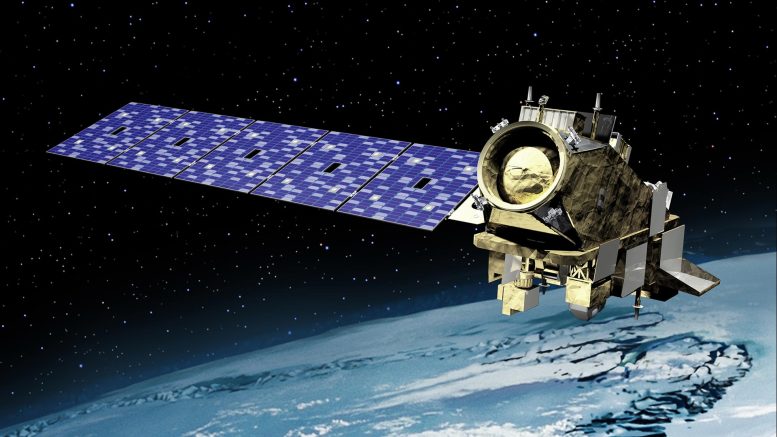
National Oceanic and Atmospheric Administration’s (NOAA) Joint Polar Satellite System-2 (JPSS-2) satellite, with NASA’s Low-Earth Orbit Flight Test of an Inflatable Decelerator (LOFTID) technology demonstration along for the ride, lifted off from Space Launch Complex-3 at Vandenberg Space Force Base in California this morning, November 10! Powered by 860,000 pounds of thrust from the United Launch Alliance Atlas V 401 rocket’s RD-180 engine, the launch occurred at 1:49 a.m. PST.
Around a minute into flight, the United Launch Alliance Atlas V 401 rocket exceeded the speed of sound a, and soon thereafter reached Max-Q – the moment of maximum dynamic pressure on the rocket.
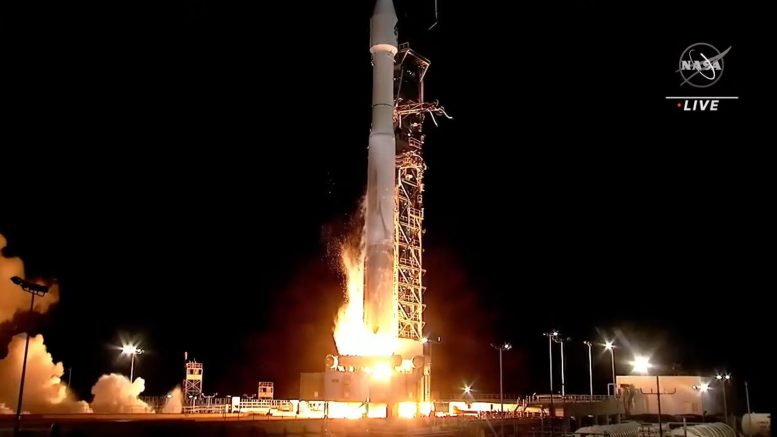
Booster engine cutoff occurred on time, the first and second stages separated as planned, and the Centaur second stage main engine started its burn on schedule. The payload fairing that protected the JPSS-2 satellite during the first minutes of ascent jettisoned as expected. The second stage’s main engine burned for just over 12 minutes, taking the spacecraft toward the Equator and to low-Earth orbit.
The United Launch Alliance Centaur upper stage achieved the desired sun-synchronous, polar low-Earth orbit for National Oceanic and Atmospheric Administration’s (NOAA) Joint Polar Satellite System-2 satellite just over 28 minutes into the flight.
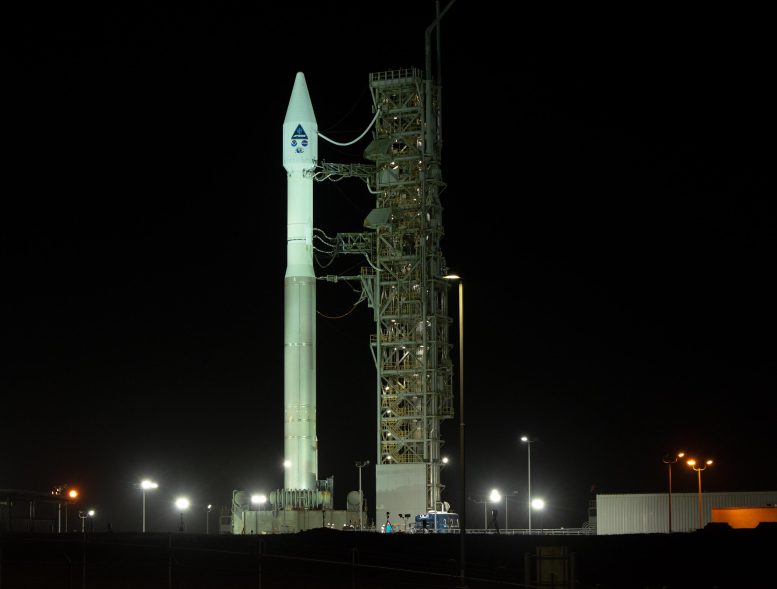
Once in low-Earth orbit, the Centaur performed a deorbit burn, jettisoned the primary payload adapter, and put Low-Earth Orbit Flight Test of an Inflatable Decelerator (LOFTID) on a reentry trajectory enabling it to demonstrate the inflatable aeroshell’s ability to slow down and survive re-entry.
Soon after the team received a signal from the JPSS-2 satellite. NOAA’s newest satellite will support essential forecasts for extreme weather events, feed daily weather models, and monitor climate change.
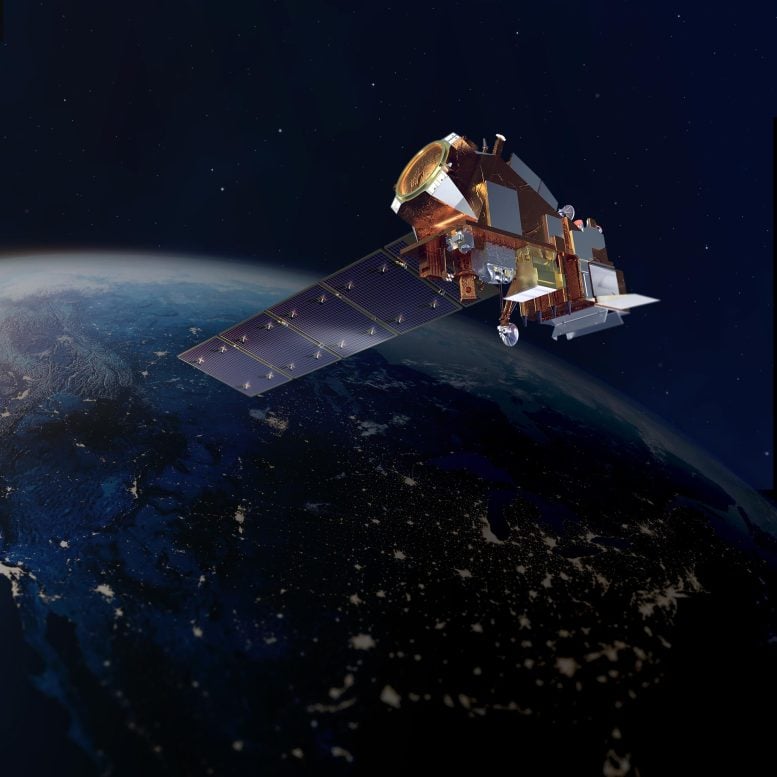
Every day and every night, polar-orbiting satellites circle the Earth many times, collecting data that feed weather forecasts and help us understand extreme weather and climate change. These advanced weather satellites make up NOAA’s Joint Polar Satellite System, which began monitoring the Earth in 2011 and will continue into the 2030s.
The Joint Polar Satellite System-2 (JPSS-2) satellite is part of a long history of National Oceanic and Atmospheric Administration’s (NOAA) and NASA satellites that date back to 1960, when the first weather satellite, TIROS-1 launched from Cape Canaveral in Florida. JPSS-2 will be followed over the next decade by two more nearly identical satellites, JPSS-3 and JPSS-4, which will continue to provide data used by NOAA’s National Weather Service to forecast weather three to seven days in advance.
JPSS-2 is about the size of a sedan at 14 feet tall by 7 feet wide, and it weighs 5,567 pounds – about the weight of an adult male rhinoceros. It is powered by solar panels that harness the Sun’s energy and its length stretches to 35 feet when its solar array is deployed.
The satellite features four highly sophisticated instruments to measure weather and climate conditions on Earth: The Advanced Technology Microwave Sounder (ATMS) sees through clouds like an X-ray and can view the structure of the atmosphere underneath those clouds and inside of storms; the Visible Infrared Imaging Radiometer Suite (VIIRS) measures in the infrared and visible part of the spectrum and can image hurricanes, floods, dust storms, cloud patterns, ocean color, and help locate and map wildfires; the Cross-track Infrared Sounder (CrIS) works together with ATMS to take detailed measurements of the atmospheric conditions needed to generate extreme weather forecasts days in advance; and the Ozone Mapping and Profiler Suite (OMPS) consists of sensors to track the concentration of ozone in the atmosphere and measure sulfur dioxide and other aerosols emitted from volcanoes and particulates from wildfires.
As JPSS-2 makes its way to a polar Earth orbit, NASA’s rideshare technology demonstration, NASA’s Low-Earth Orbit Flight Test of an Inflatable Decelerator (LOFTID), will descend back to Earth and land in the Pacific Ocean. With splashdown just over two hours after launch, LOFTID is unique in that all operations will occur within a few hours of launch. LOFTID will demonstrate how the inflatable aeroshell, or heat shield, can slow down and survive re-entry in conditions relevant to many potential applications, whether landing humans on Mars, new missions to Venus and Titan, or return of heavier payloads and samples from low-Earth orbit.
NASA’s LOFTID is managed by Langley Research Center in Hampton, Virginia, with contributions from Ames Research Center in Silicon Valley, Marshall Space Flight Center in Huntsville, Alabama, Armstrong Flight Research Center in Edwards, California, and multiple U.S. small businesses that contributed to the hardware. NASA’s Launch Services Program, based at Kennedy Space Center in Florida, is responsible for NASA oversight of launch operations.
Never miss a breakthrough: Join the SciTechDaily newsletter.
Follow us on Google and Google News.